#footer-column-divide { clear:both;background: #3B5998;color:#ffcc66; } .footer-column { padding: 10px; }

UNIVERSITAS INDONESIA

Veritas, Probitas, Justisia

IMS FTUI 2014

Integratif dan Kontributif

Civil Engineering

Proud To Be Civil Engineer

CENS UI 2013

Contribute to our country

OIM FTUI 2014

Ayo sipil pasti bisa rebut juara !!! #SemangatBerprestasi

Minggu, 21 April 2013

Earth Day: bukan sekedar peringatan, mari bertindak !

HARI BUMI 2013

Sejarah

            Hari bumi pertama diperningati 30-an tahun lalu atau tepatnya tahun 1970 dan dilakukan pertamakali di negara Amerika. Hari bumi digagas pertamakali oleh Gaylord Nelson dia dalah seorang senator. Ide Hari Bumi ini dia cetuskan pertamakali pada saat pidatonya di Seatlle tahun 1969 tentang desakan untuk memasukkan isu-isu kontroversial, dalam hal ini lingkungan hidup, dalam kurikulum resmi perguruan tinggi mengikuti model teach in mengenai masalah anti perang. Gagasan Nelson mendapat dukungan yang mencengangkan dari masyarakat sipil. Dukungan ini terus membesar dan memuncak dengan menggelar peringatan HARI BUMI yang monumental. Majalah TIME memperkirakan bahwa sekitar 20 juta orang turun ke jalan pada 22 April 1970. Nelson menyebutkan fenomena ini sebagai ledakan akar rumput yang sangat mencengangkan’ dimana : ” Masyarakat umum sungguh peduli dan Hari Bumi menjadi kesempatan pertama sehingga mereka benar-benar dapat berpartisipasi dalam suatu demonstrasi yang meluas secara nasional, dan dengan itu menyempaikan pesan yang serius dan mantap kepada para politisi untuk bangkit dan berbuat sesuatu “.

        Bumi yang pertam ini di Amerika Serikat merupakan klimaks perjuangan gerakan lingkungan hidup tahun 60-an untuk mendesak masuk isu lingkungan sebagai agenda tetap nasional. Kini peringatan Hari Bumi telah menjadi sebuah peristiwa global. Para pelaksana peringatan HARI BUMI menyatukan diri dalam jaringan global masyarakat sipil untuk Hari Bumi yakni EARTH DAY NETWORK yang berpusat di Seattle. Bila Hari Bumi ‘70 pertama paling tidak melibatkan 20 juta manusia di AS, Hari Bumi 1990 melibatkan 200 juta manusia di seluruh dunia, maka pada Hari Bumi 2000 diperkirakan terlibat 500 juta manusia di seluruh dunia dengan jargon “making history – making change”.

Kondisi Bumi Saat Ini

      Tahukah Anda, bumi yang hanya mengandung 0.03% CO2 di atmosfer, memiliki suhu rata-rata 15 oC. Bandingkan dengan Planet Venus yang mengandung 96.5% CO2 di atmosfernya, memiliki suhu rata-rata 420 oC. Sebaliknya, Planet Mars dengan atmosfer yang sangat tipis dan hampir semua CO2 nya berada di permukaan, memiliki suhu rata-rata -50%. (Planetescapes.com)


      Menurut Arctic Climate Impact Assessment/ACIA (2004), konsentrasi CO2 meningkat tajam selama 250 tahun terakhir ini dan meningkatkan suhu rata-rata bumi. Sumber utama peningkatan emisi CO2 di atmosfer berasal dari pembakaran bahan bakar fosil dan konversi hutan. Sebanyak 80% sumber energy untuk aktifitas manusia berasal dari bahan bakar fosil.


13350529722047961901
       Peningkatan konsentrasi CO2 sebagai salah satu Gas Rumah Kaca dominan menimbulkan Efek Rumah Kaca yang breakibat terjadinya pemanasan global (Global Warming). Tentu sebagai penghuni bumi kita merasakan langsung perbedaan kenyamanan udara di lingkungan kita. Misalnya di Kota Bogor, dulunya tahun 1993, saya merasa nyaman memakai sweater ketika kuliah, kini baju tebal sudah tidak nyaman lagi dipakai. Udara di Kota Bogor yang dikenal dulu sebagai kota hujan nan sejuk kita berubah drastis. Bila siang terasa panas dan mandi pun juga tidak terasa dingin lagi.

“Planet kita, rumah kita yang terabaikan. Perubahan iklim terus berlanjut. Sepertinya tampak ada bencana ekologis baru yang terjadi hampir setiap hari. Hari Bumi, ini saatnya untuk menggerakkan bumi untuk planet kita, rumah kita yang terabaikan. Hari Bumi ini saatnya untuk menggerakkan planet ini dari bawah ke atas untuk mengirim pesan bahwa Bumi tidak akan menunggu!”
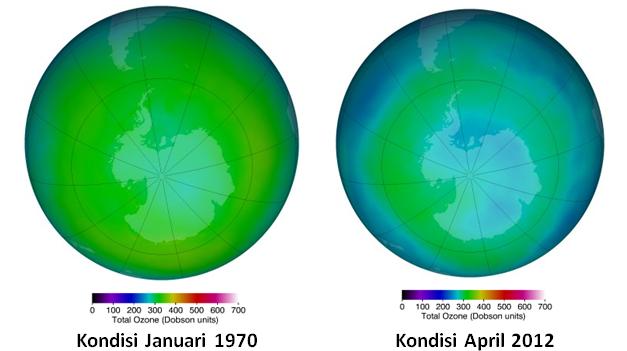


Tentu kita tidak lupa berita mengenai suhu ekstrim pada 2011-awal 2012 lalu, akibat tidak sehatnya alam, maka murkalah langit. Diturunkan salju dengan intensitas lebat, dengan suhu yang minus, akibatnya seluruh aktifitas terganggu, Suhu udara mencapai rekor luar biasa rendah. Di wilayah Polandia, temperatur udara sempat berkisar di titik rendah minus 35 derajat Celsius. Ceko bahkan mencatat suhu minus 38,1 derajat pada malam hari. Warga masyarakat pun terisolir. Sekolah-sekolah di Kiev, ibukota Ukraina, sudah terpaksa tutup. Akses jalan, jaringan kereta api, serta pelabuhan dan bandara tidak dapat berfungsi. Pasokan listrik juga terhenti oleh sebab kerusakan infrastruktur dan yang lebih parahnya lagi dapat mengakibatkan kematian akibat suhu tinggi tersebut, sebelum suhu dingin terjadi tidak lupa di benak kita bagaimana suhu panas yang berlangsung cukup lama di Indonesia, kekeringan melanda nusantara. Kita bahkan pernah merasakan suhu 30 derajat keatas terasa di Surabaya. Para peneliti dari firma riset Atmospheric and Environmental Research di AS menemukan sebuah pola yang menunjukkan bahwa musim panas yang lebih panas dari biasanya di Belahan Bumi Utara ternyata mengganggu pola cuaca dan memicu musim dingin ekstrem yang terjadi di kawasan AS dan Eropa.


Jika hal ini dibiarkan, bukan tidak mungkin kepunahan manusia juga akan terjadi dengan segera di masa mendatang. Kesadaran diri perlu ditumbuhkan sejak dini untuk menyayangi bumi ini. Setiap komponen di dalam ekosistem berinteraksi dan membutuhkan oleh karena itu, kita harus menyayangi alam dengan cara memelihara dan melestarikannya. Keseimbangan inilah yang harus tetap dijaga agar keanekaragaman sumber daya alam tetap lestari dan terjamin. Keseimbangan alam dapat terganggu atau rusak. Dengan demikian, pemanfaatan sumber daya alamsebaiknya diusahakan secara arif dan bijaksana sesuai keseimbangan alam.

AKIBAT???


Sumber:
www.marinebuzz.com
www.bionomicfuel.com
sandrossoares89.blogspot.com
www.china.org.cn
www.therainmakerblog.com
http://www.forplid.net/artikel/184-sejarah-hari-bumi.html
http://green.kompasiana.com/iklim/2012/04/22/hari-bumi-2012-jangan-buat-bumi-menunggu-ayo-bergerak-456532.html

Old Earth, now, and the future

Minggu, 07 April 2013

What Can We Learn From Amsterdam About Waste to Energy?


What Can We Learn From Amsterdam About Waste to Energy?


The Netherlands has a reputation for being progressive, from the environment to social initiatives.  About twice the size of New Jersey, a large proportion of its landmass is below sea level.  Protected (at least for the moment) by an elaborate system of dikes, the country is a center of creativity, efficiency, and diversity.  It’s a place that is open-minded and broad thinking on everything from social programs to wind energy.  A recent trip to Amsterdam also unveiled it is equally creative with its approach to waste management and water reclamation.
garbage loadingWaste management in the Netherlands is tricky.  With limited land area available to landfill, conventional waste is either incinerated to produce energy or exported elsewhere for disposal.  In the way of waste-to-energy (W2E), Amsterdam has created an incredibly efficient Afval Energie Bedrijf (AEB)   plant capable of producing 1 million MWh of electricity annually.  Beyond the energy factor, the plant is also being used to create district heating for several communities around Amsterdam, and produces 300,000 gigajoules of heat annually.
It gets better.  Right next door to the W2E plant is the Waternet water treatment plant  .  The two plants work symbiotically: the incineration plant supplies energy and heat for water treatment processes; the water treatment plant injects its sludge and biogas into the incineration plant as an additional fuel source.  In one narrow corridor of industrial landscape, Amsterdam manages a large chunk of its municipal functions.
incinerator view The process looks like this: annually, 1.4 million tons of waste is brought to the W2E plant.  This amounts to 600 trucks and 1 freight train per day of refuse from the Amsterdam metropolitan area.  The trash is deposited into a large sorting room where it is sifted and put into the incineration process.  When trash is burnt, the heat is used to boil water.  The superheated steam from this process is used to turn several turbines to generate electricity. Aware of the environmental effects of the gasses from this process, the Dutch have installed a complex process of scrubbing the flue gasses.  It starts with an E-filter to separate the fly-ash.  Next, gas passes through a fabric filter to remove other residues before being passed to an economizer.
turbine room
The gas then passes through a series of other scrubbers to remove harmful gasses and particulates so they do not become airborne: an HCl scrubber yields calcium-chloride, SO2 scrubber produces gypsum, and a polishing scrubber takes out much of the remaining water vapor. 

For many of these byproducts, attempts are being made to close the loop so the material can be used in other industrial processes—from trace elements for manufacturing, to fly ash for construction.  Whatever material is left becomes landfill.
incineration process
By the time the gas makes it out the flue, what remains is mostly water vapor and clean flue gas.  Any other emissions are monitored, and so far have been kept well within Dutch legal limits. Dioxin from the incineration process is captured and safely disposed.
smokestacks
Attention to carbon emissions has been a special focus of the W2E plant and its designers.  As the plant performs several functions (elimination of waste, generation of electricity and heat) simultaneously, it stacks up positively to other disposal methods, actually avoiding 438 kilotons of CO2 per year.  Because of these combined processes, the process reduces the net amount of carbon going into the atmosphere.
As an alternative scenario, if the same 1 million tons of waste were put in landfill, the amount of equivalent CO2 emissions per year would be 1036 kilotons.  This would mainly be as a result of methane gasses developing at the landfill.  If these gasses were either captured or burned off, it would reduce the total emissions to 404 kilotons—still a fairly large amount.
The efficiency of the W2E plant is a major positive factor in the equation.  If waste across the European Union were handled in a similar fashion, engineers estimate that W2E plants could generate 8% of the total EU electrical production by burning 182 megatons of waste, and in the process avoiding 200 million tons of CO2 per year.  It would also free up large amounts of land for other purposes, as from the U.K. to eastern Europe, landfill is unfortunately still the disposal method of choice.
wtp webThe benefits of the W2E plant are compounded when you plug the Waternet plant into the equation.  Waternet handles waste water for 1 million population equivalents, and sludge (e.g. effluents from toilets etc.) for another 2 million population equivalents per year.
The water treatment concept uses biological methods rather than chemical ones to remove phosphate and nitrogen from the water.  Sludge digestion means that energy recovery from biogas is possible in the deep aeration tanks.  This biogas is currently being used at the W2E plant, to provide gas to the natural gas grid, and also to power a small pilot fleet of 120 biogas vehicles.  Annually, Waternet digester gas production equates to 7.5 million cubic meters of natural gas, enough for 5000 households and 3500 cars.
waternet process


By looking holistically at the processes, services, inputs, and outputs of both the W2E and Waternet plants, the Dutch have come up with an elegant solution to many complex problems.  There’s been a clear attempt to close the loop on byproducts, whether it be flue gas particles or biogas from water reclamation.  Careful integration of both waste and water management processes has yielded many efficiencies and benefits that would not be possible under other conventional, stand alone systems.  With this attention to detail and maximizing benefits across the board, both Afval Energie Bedrijf W2E and Waternet stand as excellent examples of what can be achieved with some careful infrastructure planning.
One would hope in the future that Dutch officials would spend equal time and attention to reducing the amount of “waste” that is produced to begin with, and give more emphasis to reduction, elimination, recycling, and composting initiatives.

source : Chris Tobiah, http://www.celsias.com/article/what-can-we-learn-amsterdam-about-waste-energy/

PDF Afval Energie Bedrijf (AEB)
Further Reading for Afval Energie Bedrijf (AEB)
 Further Reading for Waternet Water Treatment Plant
 

Senin, 11 Maret 2013

World's tallest building will be constructed in only 90 days


News: construction is set to begin next month on the world's tallest building in Changsha, China, which will be completed in just 90 days.
Construction firm Broad Sustainable Building (BSB), a subsidiary of China's Broad Group, has corrected earlier reports that its 220-storey Sky City tower would take seven months to complete, telling ConstructionWeekOnline that the skyscraper will be finished at the end of March next year.
Following foundation work that will continue until the end of December, the company said its schedule to construct the 838-metre tower "will go on as planned with the completion of five storeys a day."
"We have not issued any press statement on this and it will go on as planned... we have not said anything about 210 days," said Broad Group senior VP Juliet Jiang, adding that the project is still awaiting approval from the government.
As previously reported on Dezeen, BSB plans to build the tower using pre-fabricated components that slot together like a Meccano toy. On completion, the skyscraper would be taller than Dubai’s Burj Khalifa and include schools, a hospital, 17 helipads and apartments for over 30,000 people. The company has already successfully demonstrated its approach on a smaller scale by constructing a 30-storey tower in 15 days.
Broad Group starts work on world's tallest tower
Above: composite image comparing an earlier design for Sky City with the Chicago skyline
Broad's CEO Zhang Ye claims his pre-fabricated towers are designed with a different load-bearing structure to conventional towers so that they use less concrete and steel and can be produced in factories rather than on-site.
However, some construction experts believe the tower is simply too tall to be built with ready-made parts. Bart Leclercq, head of structures in the Middle East at WSP, the engineering firm behind The Shard in London, warned that documents for Sky City on BSB’s website make no mention of wind load.
"There are forces working on a building that tall, including the wind. It is not a minor thing at that height," he told ConstructionWeekOnline. "By just using these simple units all put together, you are not going to get enough stiffness; this building will have an enormous storey drift, and it will sway."
Read our previous story about BSB's plans to build the world's tallest tower from pre-fabricated parts, or see all our stories about skyscrapers.
Broad Group starts work on world's tallest tower
Above: image shows how Sky City will look once completed in Changsha
Lyndon Neri and Rossana Hu of Shanghai studio Neri&Hu recently told Dezeen that their fellow architects in China are "lost" and need to stem the tide of “half-assed” building projects in the country, while Aric Chen, the creative director of Beijing Design Week, had previously warned that China needs to “slow down” and pay more attention to issues of authenticity, process and identity.
In contrast, Hong Kong-based designer Michael Young told Dezeen earlier this month that China is now "a dream scenario" for designers, with its huge manufacturing base and plenty of investment opportunities on the horizon.

Minggu, 10 Maret 2013

Olimpiade Ilmiah Mahasiswa FT UI (OIM FT)


Yuk sipil, mari kita berkarya dan berprestasi sambil menngeluarkan inovasi-inovasi untuk membuat indonesia lebih maju :)


Prepare Yourself!

It's time to dive your potency, OIM FTUI 2013: Intelligence in Integrity!

March - April 2013

PKM (P, KC, K, T, M, GT, AI)
Bahasa Debate
Quiz
Inspirative Poster

PKM-K Exhibition

Performance from each department on opening!

Check @iptekFTUI for more info :)


Jadwal OIM FTUI 2013:
>11-15 Maret :Pendaftaran
>18 Maret : Opening
>18 dan 21 Maret : Penyisihan Quiz
>19 Maret : Pengumpulan PKM
>20 dan 22 Maret : Penyisihan Debat
>18-29 Maret : Pengumpulan Poster Inspiratif
>1 April : Semifinal Debat
>1-5 April : Pameran PKM-K
>1 April : Pengumuman PKM yang lolos
>3 April: Final Debat
>4 April : Presentasi PKM
>5 April : Final Quiz
>5 April : Closing


Cara pendaftaran OIM FTUI 2013

Melalui SMS dengan format:

-PKM: <PKM-(Bidang)_Nama Ketua_3kata pertama Judul PKM
Contoh: PKM-M_Muslimah_"Sekolah Cherrya" Program> kirim ke 081286209723( Rafika-PJ PKM)

-Kuis: <KUIS_Nama Ketua_Departemen> kirim ke 085669377986 (Marfel-PJ Kuis)

-Poster: <Poster_Nama_Departemen_Judul Poster> kirim ke 081393963977 (Anyes-PJ Kuis)

-Opening: <Opening_Nama ketua_Departemen_Judul Performance> Kirim ke
083875503585 (Denia-PJ Opening)

-Debat: Debat_Nama ketua_Departemen> Kirim ke 08998183971 (Imma-PJ Debat)


Yuk sipil, mari kita berkarya dan berprestasi sambil menngeluarkan inovasi-inovasi untuk membuat indonesia lebih maju :)


Info lebih lanjut, lihat di http://oimftui2013.wordpress.com/


Bagi teman-teman yang ingin mengikuti lomba tersebut, 

harap untuk mengisi Form Pendataan Lomba DTS


Bidding Project Officer CENS 2013


Pagi Sipil!!

Bidding P.O CENS UI 2013 telah dilaksanakan pada hari minggu, 3 maret 2013 bertempat di ruang BP3 Fakultas Teknik Universitas Indonesia pukul 09.30-19.30 dengan 4 calon yaitu:

Radityo Andjaringrat Adhi
Descilia Pranata Amin
Amirul Akbar Rosadi
Indri Mahadiraka

adapun panelis di bidding kali ini yaitu:
1. Tim Panelis Alumni CENS (Rifa 07, Andri 03)
2. Tim Panelis CENS 2011 (Dzikry, Tata, Kania, Dewo)
3. Tim Panelis CENS 2012 (Syaf, Karim, Evan, Andin, Nana)

Apresiasi patut kita berikan kepada para calon P.O beserta tim karena mereka telah memberikan performance yang terbaik saat bidding kepada warga dan panelis. Salut!!

Akhirnya CENS 2013 ini dipercayakan untuk dipimpin oleh Radityo Andjaringrat Adhi S'11 !! Selamat dan semoga dapat menjalankan CENS ini dengan semaksimal mungkin.

Laporan Singkat Bidding CENS 2013

Bidding CENS kali ini dihadiri oleh 72 orang, jumlah yang cukup banyak mengingat hari itu adalah hari minggu. Alur acara adalah sebagai berikut:

Presentasi calon P.O 15 menit
Tanya-jawab panelis 60 menit
Tanya-jawab floor 15 menit
Simulasi wawancara

Penentuan urutan bidding dilakukan dengan undian dengan urutan Radit, Descil, Rully dan Indri. Calon P.O beserta tim memasuki ruangan bidding, sementara calon P.O dan tim lain menungggu di luar ruangan

Calon P.O melakukan presentasi selama 15 menit, setelah itu dilakukan sesi tanya-jawab dengan diperbolehkan bagi tim calon P.O untuk membantu menjawab

Selesai tanya-jawab, calon P.O beserta tim melakukan simulasi wawancara. Panelis memainkan beberapa peran antara lain dari sponsorship, media partner, stakeholders lainnya. Calon P.O diwawancara seolah mereka sedang menawarkan kerjasama CENS kepada para stakeholders dengan tuntutan dapat meyakinkan para stakeholders. Ketenangan menjawab diperlukan untuk sesi ini.

Akhirnya bidding selesai pukul 19.30 dan semua peserta pun nampak lega dan puas telah melalui bidding dengan cukup baik dan lancar

Tema yang diangkat para calon P.O CENS 2013

Para calon P.O membawa 4 tema yang berbeda yang tentunya berkaitan dengan Indonesia. Tema-tema yang diangkat antara lain:

1. Radityo Andjaringrat
    Tema  : Surpass the limit with through Sunda Strait Bridge

2. Descilia Pranata
    Tema    : Supporting the logistic distribution through Megaport

3. Amirul Akbar Rosadi
    Tema   : Multi Purpose Deep Tunnel

4. Indri Mahadiraka
    Tema   : Revitalisasi Infrastruktur Kelautan Guna Menunjang Implementasi Sistem Transportasi Air Nusantara dalam Membangun Skala Ekonomi Makro


Sabtu, 23 Februari 2013

International Youth Green Summit


International Youth Green Summit (IYGS) is an international forum held by beneficiaries of the Nusantara Activist Scholarship (Baktinusa) Dompet Dhuafa. Every country has its own environmental problem which has to be solved immediately. Therefore, IYGS challenges international youth to find solutions for global environment problem or specific environment problems in each country by designing a green project to solve the problems. By organizing this event, we hope international youth will be more respected and able to take action to make our earth become a better place in the future.
Objective
IYGS aims to provide an understanding of the facts and the impact of global environmental, support youth to initiate project in their home country and solve the environmental problems thein their respective countries , be a good chance for international youth to exchange ideas and discuss ways to solve environmental problems. We also try to call youth generation to take actions and save the environment for better living.
Participant
To be a participant of IYGS you have to be between 16 and 30 years of age. Submit the green proposal project and video to be presented at the summit event.

Pre-event Competition

Come on join and register yourself on http://iygs.org/index.php/registration

For more information : http://iygs.org

Kamis, 21 Februari 2013

Civil Engineering Day 2013 - Universitas Atma Jaya

Civil Engineering Days (CED) merupakan kegiatan yang rutin dilaksanakan setiap tahun oleh Himpunan Mahasiswa Sipil (HMS) Program Studi Teknik Sipil Universitas Atma Jaya Yogyakarta. Melalui kegiatan CED ini diharapkan mahasiswa dapat lebih memperluas wawasan tentang bidang teknik sipil melalui berbagai kegiatan yang dilaksanakan serta lebih memperkenalkan Program Studi Teknik Sipil Universitas Atma Jaya Yogyakarta kepada masyarakat umum

Himpunan Mahasiswa Sipil (HMS) sebagai organisasi di bawah naungan Prodi Teknik Sipil Universitas Atma Jaya Yogyakarta akan mengadakan event terbesar yang diselenggarakan tiap tahunnya, yakni Civil Engineering Days (CED) 2013 dengan mengangkat tema : “Secuil Pengalaman untuk Membangun Dunia”. Rangkaian kegiatan di dalamnya, antara lain :
1. Seminar Nasional
2. Lomba Rancang Desain Rangka Atap (tingkat Nasional)
3. Tinjau Lapangan
4. Malam Puncak


1. Lomba Rancang Desain Rangka Atap Tingkat Nasional


ketentuan umum:
 Lomba terbuka bagi mahasiswa aktif (D3/D4/S1) Perguruan Tinggi Negeri/Swasta se-Indonesia, terutama Jurusan/Program Studi Teknik Sipil dan Arsitektur.
 Peserta lomba berbentuk kelompok yang beranggotakan maksimal 3 (tiga) orang (boleh beda Jurusan/Program Studi), berasal dari Perguruan Tinggi yang sama dan belum mencapai gelar sarjana.
 Setiap Perguruan Tinggi boleh mengirim lebih dari satu kelompok.
 Setiap kelompokdiperbolehkan memiliki Dosen Pembimbing.
 Gagasan desain adalah hasil karya asli peserta dan belum pernah diperlombakan maupun dipublikasikan
 Peserta lomba dikenakan biaya pendaftaran Rp 150.000,- untuk setiap tim.
Karya di kumpulkan : 30 Maret- 13 April 2013
Pendaftaran : 18 Februari –13 April 2013
Transfer Biaya Pendaftaran BCA Rek 0373203189 a/n Rudi Hartanto
​
  JUARA I  : Trophy, Sertifikat, dan uang tunai Rp 5.000.000,00
  JUARA II  : Trophy, Sertifikat, dan uang tunai Rp 3.000.000,00
  JUARA III : Trophy, Sertifikat, dan uang tunai Rp 1.000.000,00
​
Contact Person LOMBA :
1. Sigit  : 085729816870
2. Rudi  : 085725785890
3. Ajeng  : 081218300339

Info lebih lanjut cek di Lomba Desain Rangka Atap

info lain dapat


Bagi teman-teman yang ingin mengikuti lomba tersebut, 

harap untuk mengisi Form Pendataan Lomba DTS


UGM 2nd Civil In Action "Worlding With Dignity"

CIA

UGM kembali mengadakan serangkaian kegiatan yang bertajuk "Worlding With Dignity". Kegiatan mencakup perlombaan, seminar nasional dan career workshop yang diadakan di bulan april-mei 2013.

1. Lomba Rancang Kuda-Kuda tingkat nasional V


   Akibat dari bertambahnya kebutuhan manusia terhadap kayu, pemerintah mengeluarkan Izin Usaha Pengelolaan Hasil Hutan Kayu HTI (Hutan Tanaman Industri). Program pemerintah ini bertujuan untuk mengurangi pengambilan bahan baku dari hutan alam. Usaha Pengelolaan Hasil Hutan Kayu HTI (Hutan Tanaman Industri) ini menghasilkan pohon yang dapat tumbuh dengan cepat namun memiliki kualitas dan mutu kayu yang kurang baik. Dengan dasar inilah kami mengadakan Lomba Rancang Kuda-Kuda berbahan dasar kayu sebagai bentuk dukungan terhadap program pemerintah tersebut. Lomba Rancang Kuda-Kuda merupakan kegiatan rutin dalam program kerja Bidang II (Pendidikan dan Penelitian) Keluarga Mahasiswa Teknik Sipil Jurusan Teknik Sipil dan Lingkungan Fakultas Teknik Universitas Gadjah Mada. Lomba yang mengangkat tema  “Inovasi dan Efisiensi” ini menuntut para peserta untuk berpikir cerdas dalam membentuk suatu rangka kuda-kuda yang tidak hanya memiliki bentuk inovatif namun juga ringan, kuat, dan efisien, Lomba ini telah diselenggarakan sebanyak empat kali dengan peserta mahasiswa/i teknik sipil S1 atau sederajat dari berbagai perguruan tinggi di Indonesia. Lima belas tim terbaik akan dipilih sebagai finalis dan diundang untuk merakit, menguji, serta mempresentasikan kuda-kudanya secara langsung.

Pendaftaran               : 18 Februari - 16 April 2013
Seleksi Proposal        : 16 April - 4 Mei 2013
Pengumuman Seleksi : 5 Mei 2013
Daftar Ulang               : 5 Mei - 11 Mei 2013
Perlombaan                : 19 - 21 Mei 2013

2. Eco-House Design Competition edisi Rumah Susun
Eco-House Design Competition adalah lomba desain rumah ramah lingkungan yang diselenggarakan oleh Pelayanan Komputer Teknik Sipil dan Majalah Clapeyron, di bawah naungan Keluarga Mahasiswa Teknik Sipil dan Lingkungan Universitas Gadjah Mada. Tahun ini merupakan tahun keempat diselenggarakannya Eco-House Design Competition. Dengan tema “When People’s House and Green Technologies Harmonized”, lomba ini menuntut kreativitas peserta untuk mendesain rumah ramah lingkungan sebagai solusi atas tidak seimbangnya pertumbuhan penduduk dengan ketersediaan lahan dan kurangnya pengelolaan limbah serta sumber daya yang ada. Peserta berasal dari mahasiswa/i D3/D4 dan S1 dari perguruan tinggi negeri maupun swasta se-Indonesia. Dari seluruh peserta akan diseleksi menjadi lima puluh karya yang akan dipamerkan di Perpustakaan Pusat Universitas Gadjah Mada. Sebagai finalis, lima peserta dengan karya terbaik akan diundang untuk mempresentasikan karyanya secara langsung di depan para juri.

Pendaftaran              : 15 Februari - 10 Maret 2013
Pengumpulan Karya  : 10 Maret - 20 April 2013
Penjurian                  : 22 - 26 April 2013
Pengumuman Finalis : 29 April 2013
Presentasi                : 10 Mei 2013
Pengumuman Juara   : 11 Mei 2013

3. Lomba Karya Tulis Ilmiah

Bangunan tinggi di Indonesai sudah ada sejak lama, walaupun hanya ada di beberapa wilayah kota saja. Namun saat ini, bangunan tinggi sudah banyak dibangun di berbagai wilayah yang ada di Indonesia. Sebut saja Jakarta, Bandung, Medan, Palembang, Solo, dan berbagai kota besar lainnya sudah memiliki bangunan tinggi. Namun fungsi bangunan tinggi ini belum optimal dari berbagai aspek. Apalagi dengan kemajuan ilmu pengetahuan dan teknologi yang sudah sangat maju saat ini, optimalisasi fungsi bangunan tinggi ini bisa lebih baik lagi dari berbagai aspek. Bagaimana cara yang paling tepat untuk optimalisasi fungsi bangunan tinggi? Dan bagaimana menghubungkannya dengan kemajuan teknologi serta ilmu pengetahuan?

download formulir di website mulai 18 Februari 2013
Pengumpula Karya Tulis tgl 27 Maret - 4 April 2013
Pengumuman Finalis tgl 8 Mei 2013
Presentasi tgl 10 Mei 2013
Pengumuman Juara tgl 11 Mei 2013

Bagi teman-teman yang ingin mengikuti lomba tersebut, harap untuk mengisi Form Pendataan Lomba DTS

Minggu, 17 Februari 2013

Trash Bridges


Locomotive on a bridge made of recycled plastics

Transportation officials dismayed about the nation’s decaying bridges are turning to the bottle to find relief. And it’s helping.

The solution isn’t what’s in the bottle, it’s what the bottles are made of, where they came from, and what they’re capable of doing. Discarded plastic beverage bottles, milk jugs, detergent containers, and other household plastic trash can become, through the magic of materials engineering, a totally green building material for new bridges and other infrastructure upgrades.
 :
Non-biodegradable thermoplastics are anathema to our nation’s waste-management system. Improved recycling programs have reduced the sheer volume of plastic in landfills, but there’s still the problem of what to do with all of that recycled material. The supply of second-generation plastic far outstrips the demand. Recycled structural composites (RSCs) based on technologies developed at Rutgers University and commercialized by Axion International, New Providence, NJ, transform mountains of melted down and remolded plastic waste into an all-green building material for heavy-duty infrastructural projects.

The U.S. Army was an early adopter of the new material, in part because it has regulatory autonomy over the infrastructure on its bases. Since 1998, the Army has been driving jeeps, tanks, and trains over short-span plastic bridges at forts Leonard Wood, Bragg, and Eustis, providing case data that is driving the technology’s acceptance in civil projects in both the U.S and Europe.
In 2011, for example, the company completed the first plastic vehicular bridge in Europe, a 90-foot span over the River Tweed near Edinburgh. The pre-fabricated bridge was shipped in six sections to Scotland, where crews rapidly reassembled them. “We were able to complete construction on-site in just two weeks,” said Steve Silverman, Axion’s president and CEO. Putting the pieces together, in fact, took only four days out of that process, he said. “The remarkably fast erection time for a 90-foot bridge is a major benefit.”
Assembling a plastic vehicular bridge over the river Tweed


The degradation of the U.S. infrastructure is not a new problem, and bridges are one of the areas of gravest concern because of the obvious health and safety issues associated with a potential bridge collapse. Although the nation’s bridges fared much better than schools, roads, levees, and most other categories graded in the American Society of Civil Engineers’ most recent Report Card for America’s Infrastructure, they still only eked out a C. With one in four bridges either structurally deficient or functionally obsolete, and a $17-billion annual price tag for necessary improvements, there’s little question that transportation officials will take interest in any technology that offers a lower-cost alternative to traditional steel and concrete construction.

Converting Garbage to a “Gar-Bridge”

The process of manufacturing the RSC materials is straightforward. Axion receives giant bundles of sorted plastic – it has to be high-density polyethylene, the kind stamped with a #2 recycling code. The plastic is comingled with the other principal component, glass fibers coated in polystyrene or polypropylene, generally scrap material from the manufacture of car bumpers.  

The raw materials are ground into tiny flecks, then subject to high – but below melt point – heat. The precision of the heating process is critical to getting the otherwise incompatible properties of various polymers to work together to form a stronger material. The hot glop is extruded through molds into its specified shape and allowed to cool.

The company forms its thermoplastics into standard construction shapes such as I-beams, pilings, and boards, and also can pre-build an entire bridge or boardwalk to a customer’s specifications. Thomas Nosker, Ph.D., the Rutgers materials engineer who pioneered the technology, has said the individual pieces “come together like a child’s play set” to form bridges that are cost-efficient and easy to erect.

High-Performance Assemblies

Engineers have been experimenting with composite bridges made of space-age carbon-fiber-reinforced polymeric materials since the mid-1990s, and efforts have focused on high-performance assemblies engineered for specific performance properties. Their performance, however, suits them well toward applications in new construction and retrofits in earthquake-prone regions, harsh marine environments, or other situations where the long-term durability will offset their higher first costs, according to the U.S. Federal Highway Administration. But these advanced composite structures require exotic raw ingredients and specialized fabrication methods that drive the price up.

According to Axion, the lion’s share of the plastic bridge market is on the nation’s secondary roadways where spans of 15 to 25 feet are commonplace. From a performance standpoint in those applications, thermoplastics won’t rot, rust, splinter, crumble, or attract bugs like wood, steel, or concrete. They are lighter, don’t need to be painted, and require no special tools or training to install. The initial cost of building a plastic bridge is about the same as a similarly sized traditional structure, but they are cheaper over their 50-year expected lifespan because they avoid these costly ongoing maintenance chores. State transportation officials concerned about the public perception of plastic as a flimsy material are heartened by military videos showing the bridges holding their own against 70-ton tanks and 120-ton locomotives.

Axion’s Silverman said the company is developing other infrastructure applications for the STRUXURE components, including sound walls, retaining walls, marinas, jetties and piers, culverts, and platforms. The Container Recycling Institute counts approximately 1,755 thousand tons of HDPE sold annually in the United States, meaning there is likely to be a sustainable supply of raw materials for this emerging sector of the sustainability market.

 Source : http://www.asme.org/kb/news---articles/articles/construction-and-building/trash-bridges